

- Galleries
- Optical Illusion Art Gallery
Cool Optical Illusion Drawings - Made With AI
Discover fascinating optical illusion drawings created by AI. Get inspired by these mind-bending visuals and learn how to generate your own unique illusions on NightCafe.

As seen in








Optical Illusion Art Gallery
A curated collection of striking AI-generated optical illusion drawings that challenge perception and ignite the imagination. See the impossible made possible.


Didn't find what you were looking for? Create your own below!
Create your own Cool Optical Illusion Drawings - Made With AI images
Discover the magic of Text to Image AI by creating your own unique images. Edit the prompt below to customize your creation.
No payment or credit card required.

Visually Stunning Illusions
Explore Mind-bending Optical Illusion Art
Dive into a world of surreal perception with our collection of AI-generated optical illusion art. Each piece is a testament to the boundless creativity of artificial intelligence, offering a unique and captivating visual experience. Get inspired by these cool optical illusion drawings and prepare to have your mind bent in the most delightful ways.
Create Your Own Mind-Bending Illusions
Step 1
Describe Your Illusion
Begin by describing the optical illusion you envision in the prompt box. Be specific about the patterns, colors, and effects you want to achieve. Think about what kind of visual trickery you want to explore – perhaps repeating patterns, impossible objects, or hidden images.
Step 2
Generate Your Illusion
After crafting your prompt, click the 'Generate' button. Our AI will process your description and create a unique optical illusion drawing based on your input. Watch as the digital canvas transforms into a visual puzzle.
Step 3
Download and Share
Once your optical illusion is ready, you can download it in high resolution to share with friends or use in your projects. You can also share it with the NightCafe community to inspire others and see what they create!

Create Your Own Illusions
Generate AI Illusion Art With Ease
Unleash your inner artist and generate your own unique AI illusion art with our intuitive platform. Whether you're a seasoned creator or a beginner, our tools make it simple to bring your wildest visual concepts to life. Explore different styles and models to generate AI illusion art that is truly your own.
More Galleries
Little Fish Drawings - AI Generated Art
Discover charming AI-generated little fish drawings. Perfect for inspiration or creating your own adorable aquatic art. Bring your underwater scenes to life with unique designs.
Water Background Images - AI Generated
Explore a diverse collection of AI-generated water background images. Perfect for digital art, web design, or any project needing a splash of aquatic beauty. Create your own today!
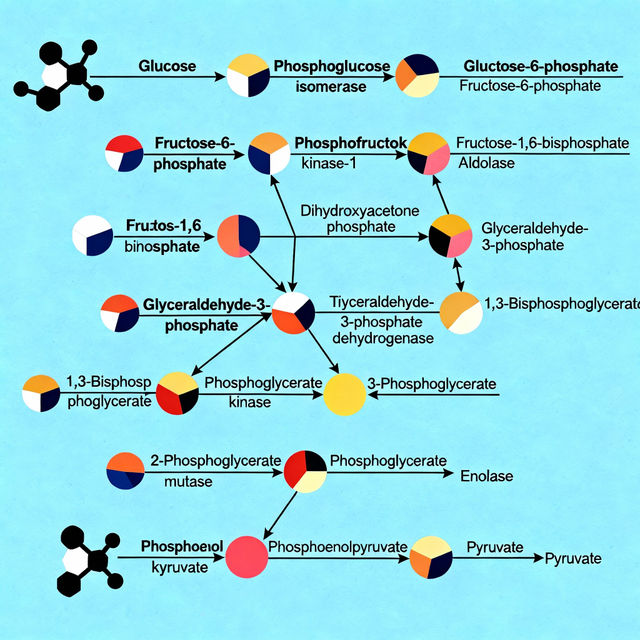
Glycolysis Drawings - Visualizing Cellular Respiration
Discover intricate AI-generated drawings of glycolysis, a key cellular respiration pathway. Visualize the biochemical process and enhance your understanding with these detailed artistic representations.
RGB Wallpapers
Explore a dazzling collection of AI-generated RGB wallpapers. Perfect for adding vibrant color and dynamic light to your screen. Create your own unique RGB wallpaper today!
Frequently Asked Questions
Your Questions About AI Optical Illusions, Answered
How does AI create optical illusions?
AI models are trained on vast datasets of images and patterns. For optical illusions, they learn to manipulate visual elements like lines, shapes, colors, and perspectives in ways that trick the human eye. This can involve creating depth where there is none, generating impossible objects, or playing with symmetry and repetition to induce a sense of movement or distortion.
What kind of prompts work best for generating optical illusions?
To generate effective optical illusions, focus your prompts on elements known to create visual trickery. Use terms related to perspective (e.g., 'foreshortening,' 'vanishing point'), impossible geometry (e.g., 'Penrose triangle,' 'Escher-style'), symmetry, repetition, tessellations, and contrasting colors or patterns. Describing the desired effect, such as 'mind-bending,' 'surreal perception,' or 'impossible space,' can also guide the AI.
Can I create illusions that are specific to certain styles, like surrealism or abstract art?
Absolutely! NightCafe's platform allows you to combine optical illusion concepts with various artistic styles. You can prompt for 'surrealist optical illusion,' 'abstract geometric illusion,' or even specify artists known for playing with perception. Experiment with different style keywords alongside your illusion-focused prompts to achieve unique results.
Are there any tips for making my AI-generated optical illusions more impactful?
To enhance the impact of your AI optical illusions, consider focusing on clarity of the illusionary effect. Ensure there's a clear contrast between elements, or a deliberate use of repeating patterns that create a sense of depth or movement. Simplicity can often be more powerful than complexity when it comes to tricking the eye. Experimenting with different aspect ratios can also affect how the illusion is perceived.